Google Project Genie Gets Genie 4: Create and Explore Interactive AI Worlds
Google’s latest Project Genie update adds real-time world editing, native audio, an AI creative agent, and a gallery for sharing interactive environments.
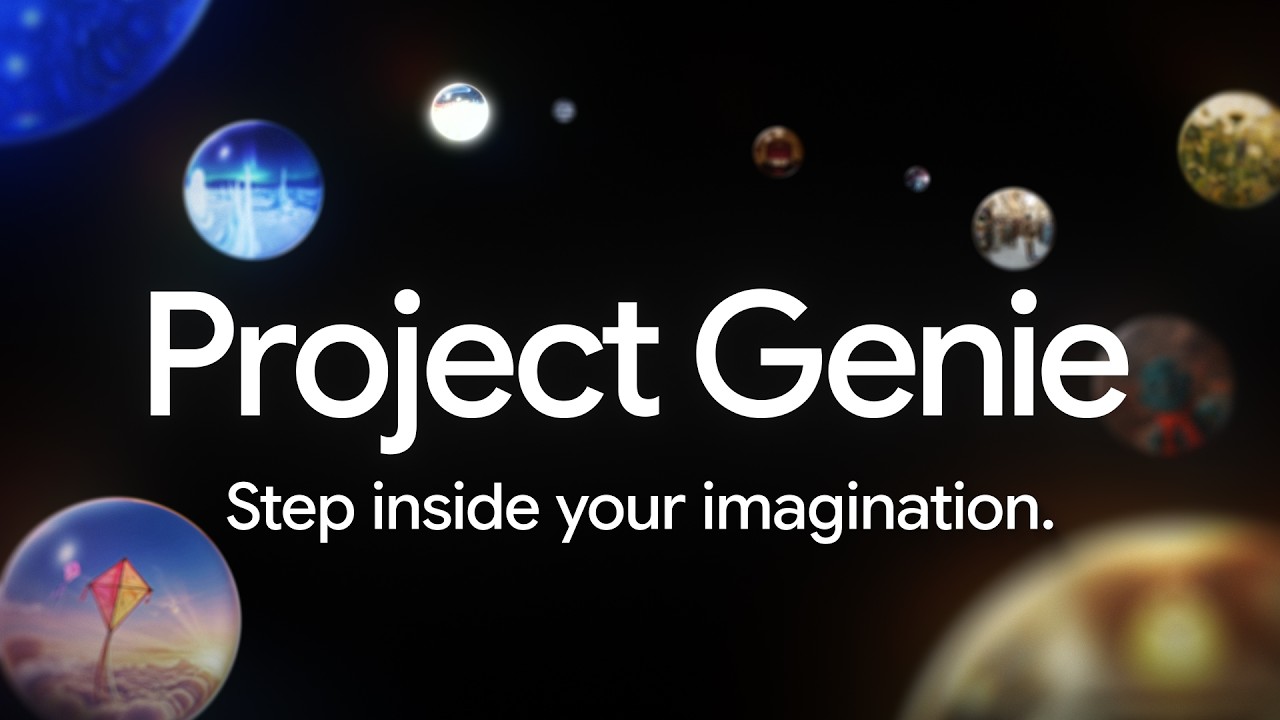
Project Genie is moving beyond the first experimental world-generation demo. In an update announced on November 18, 2026, Google introduced Genie 4, a creative agent, new controls for interactive environments, and a gallery where users can explore and remix worlds. The idea is to create a scene, step inside it, and change what happens while you explore—using natural-language instructions.
This is not a conventional video generator. Project Genie is designed to produce a navigable environment that responds as you move and interact with it. It is still an experimental research product, so its output should not be confused with a finished game or a production-ready simulation.
What is new in Project Genie?
The November update introduces four main changes:
- Genie 4: Google says the model improves visual fidelity, physics, and interactive audio.
- Live world editing: While exploring, you can use text prompts to change weather, add characters, or redirect events.
- Project Genie agent: Describe an idea in a conversation. The agent helps build the initial world, visuals, and background music, then Gemini can observe the session and suggest or trigger events.
- Community gallery: Explore curated and community-made environments, then remix worlds and share your own creations.
Change the world while you explore
Earlier world-generation workflows often began with a prompt and required another generation to make a major change. Genie 4 lets users modify the scene during a session. You might start in a quiet landscape, ask for rain, introduce a character, or change what is happening around you. The system attempts to adapt the environment while keeping the scene connected to the current context.
The experience is intended to feel like exploration rather than watching a fixed clip. Users can navigate and steer the scene, then issue new instructions as they go.
Audio is generated with the environment
Genie 4 also generates sound as part of the world. Google describes ambient audio such as wind and waves, music, and interactive dialogue that responds to the situation or to user input. This matters because sound can make an environment feel more connected to what is happening on screen.
Audio and visual generation are still being developed. Google lists real-time audio accuracy and complex physical interactions among the areas it continues to improve.
Official Google DeepMind demonstration
## The creative agent and community gallery
The Project Genie agent helps turn a description into an environment. It can coordinate Google's multimodal models to establish the initial look and mood of a world, including visuals and background music. During exploration, Gemini may offer suggestions based on what it observes or trigger events automatically.
The gallery adds a way to browse and remix existing experiences instead of starting from a blank prompt. Google highlights examples such as a room-by-room mystery inside a gothic manor and a world that lets visitors explore an ant colony from a different perspective.
Genie 3 also receives updates
Genie 3 remains available in the model selector for users who need longer sessions or worlds based on panoramic images. Google's November update says a generation can last up to three minutes, compared with one minute previously. Users can also connect multiple worlds and change events with text prompts while exploring.
Who can try Project Genie?
Google says the new Project Genie experience is rolling out to eligible Google AI Ultra subscribers aged 18 and over. Google AI Pro members can join the waitlist. Availability may depend on eligibility and rollout status, so check the official Project Genie page rather than assuming access is open to everyone.
The current announcement does not describe Project Genie as a free tool for all users.
What are the limitations?
Google presents Genie 3 and Genie 4 as frontier research systems. It lists several areas that still need work, including camera latency, detailed physical interactions, audio precision, and keeping objects and scenes consistent over longer sessions. A world may look convincing in a short demonstration, but details can change as it continues.
Project Genie is best viewed as a tool for exploration, prototyping, creative experiments, and early simulation research—not as a replacement for a game engine, 3D production pipeline, or tested training simulator.
Why this update matters
The update points toward a different way to use generative AI. Instead of generating a finished image or video and stopping there, users can create a space, move through it, and steer the next event. For creators, this could help with visual ideas, early game concepts, scene planning, and interactive storytelling.
The practical value will depend on access, stability, and how well the generated world responds to more complex instructions. Those are questions the current research preview is still exploring.
Summary
Project Genie, powered by Genie 4, lets users create interactive worlds, explore them, and change scenes in real time with natural-language prompts. The update adds native audio, a creative agent, and a gallery for exploring and remixing worlds. Access is currently rolling out to eligible Google AI Ultra subscribers, with a waitlist for Google AI Pro members.